The Top 10 Tips To Test Equipment For PAT in Hinckley
The selection, application and maintenance of testing equipment is the basis of any effective and compliant Portable Appliance Testing (PAT) programme in the UK. Although the ability of a technician to carry out precise safety tests is essential, it is also dependent on their test instrument's quality and calibration and the right use. Equipment used for electrical testing must be in compliance with the IET Code of Practice for tests and inspections in-service for electrical equipment, which is the industry norm for good practice. The instruments used to test the security of electrical devices vary, from high-end portable appliances testers to basic voltage indicators. Understanding the capabilities of these tools as well as their limitations and legal requirements is vital for any dutyholder who wishes to assure the safety and reliability of equipment that is electrical.
1. Portable Appliance Tester Tester in Hinckley
It is a primary device that is an automated safety test instrument. Modern testers range from simple units that perform earth continuity tests and resistance tests to insulation to sophisticated models that provide additional tests such the test of touch current or earth leakage. The capability to conduct a soft test or substitute leakage on sensitive electronic devices (e.g. printers, computers) that could be damaged by high voltage during an insulation resistance test is an important feature. The complexity of the appliance must be considered when deciding on a test.
2. Mandatory Annual Calibrations by an Accredited UKAS Laboratory in Hinckley
This is a condition to ensure compliance. The United Kingdom Accreditation Service requires that the test PAT be regularly calibrated, typically every year, by an accredited laboratory. This calibration verifies that the instrument's measurements are exact and compatible with national standards. The calibration certificate is required for every tester that is used by the company. Instruments that are not calibrated or calibrated invalidate all test results and offer no defense in an incident that an accident occurs.
3. Validity Checks for Functionality and User Checks (Daily/Pre-Use)
Technicians are required to carry out daily functional checks which are often called "user checks" or "verification tests", before beginning any test. It is usually done using a set of known-good test leads or an "proofload". If the tester fails to deliver the expected results for this known-good item It indicates a problem with the tester itself, and it must not be utilized until the tester is repaired and recalibrated. This is an essential procedure to ensure that the test equipment is operating properly on the day of usage.
4. The function of visual inspection equipment in Hinckley
The tools required for a thorough inspection, even though they are often ignored by testers, are equally essential. Included are tools for dismantling sockets and appliances, correct fuse ratings, label printers, or labels that are preprinted, as well as an inspection torch that can be used to examine dark areas. Visual inspection is where the vast majority of faults are found. If you don't take care of this step, it can undermine your entire test process.
5. Specialised Test leads and Adapters in Hinckley
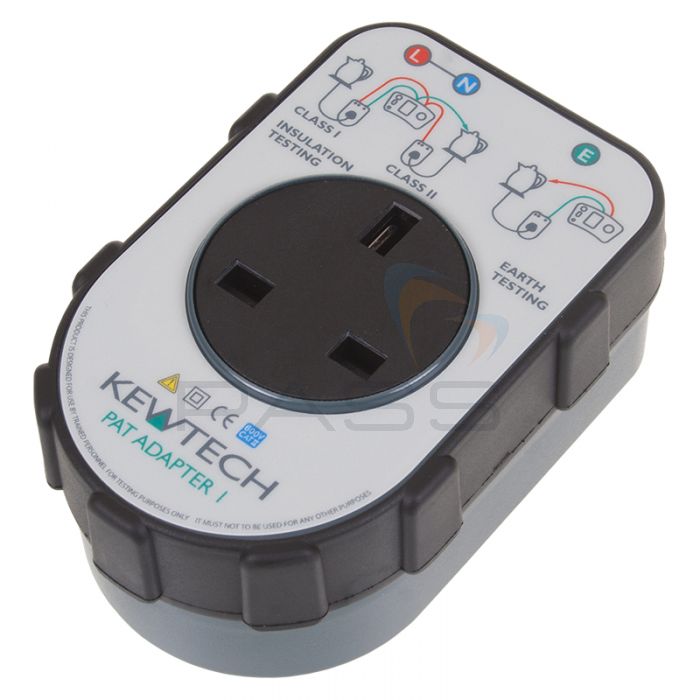
A skilled technician is outfitted with a variety of tests leads, adaptors and other accessories that can be used to connect every type appliance inlet. The set includes the standard UK 3-pin plug, IEC adaptors (for testing detachable leads) and the croc and clamshell clip leads for testing equipment that doesn't have plugs (e.g. industrial machinery). The set also includes specialised adaptors such for shaver connectors, commando connectors and IEC60309 industrial connectors. A wrong connection could cause the test to fail or not properly performed.
6. Earth Bond Test lead and its importance to Class I equipment
The test of the earth bond for Class I (appliances which require an earth to ensure safety) is vital. To ensure that a strong connection to the Earth circuit is established it is crucial to use a test lead that has a large capacity current (5-25A). If the lead is of low quality or is not suitable for the current test, a false pass could be issued. This can result in a safety risk which could lead to fatality. Technicians should be aware of the importance of selecting the appropriate lead to test.
7. Resistance to Insulation Parameters and Voltage Tests
The insulation resistance test measures the insulation's integrity through a very extremely high DC (usually 500V) voltage between the earth and live conductors. Technicians need to know when they should perform the test, and when to not (for example, when testing sensitive electronics or surge protectors leakage tests would be more appropriate). The test equipment should be able to provide the correct test voltage as stated in the IET Code of Practice.
8. Pass/Fail Criteria, as well as the instrument's presets in Hinckley
Reputable test equipment has built-in pass/fail rules based upon the IET Codes of Practice. For instance, earth bond resistance should be 0.1O+R and insulation resistance must be >1MO. Transparency can be achieved by ensuring that the technician is aware of the preset limits. He should not alter them in order to ensure a pass. The service provider must be able to confirm that their equipment is configured to these industry-standard thresholds, ensuring consistent and substantiated results.
9. Capabilities for managing data and reporting in Hinckley
The latest PAT testers are also data loggers. They are capable of storing hundreds, or even thousands, of test results. The data can then be transferred to software to generate documents for asset records, certificates and failures reports. Transparent providers will make use of this function to give detailed, clear evidence. Manual paper-based record keeping is prone to errors, loss and falsification, and it does not reflect the best practices of the industry.
10. Voltage Indicators & G38 in Hinckley
While the PAT functions as the main instrument, a skilled technician could also have a voltage indicator to ensure that the device is in good working order prior to making electrical connections. This is particularly important when replacing a socket or investigating an issue. The second device should comply with the HSE Guidance Note, GS38 which outlines the requirements for safe design (e.g. finger guards or insulated probes, appropriate current fuse). This device adds a layer of safety. Follow the best Hinckley fixed electrical testing for website examples.
Top 10 Tips On The Regulatory Compliance Of Fire Extinguisher Service in Hinckley
The regulatory framework for the UK's fire extinguisher maintenance is an entire approach to ensure public safety and the reliability of equipment through clearly defined obligations, technical standard and certification schemes. Fire extinguisher servicing is governed by strict legal obligations which are defined in the Regulatory (Fire Safety) Order in 2005. Technical standards and third-party certification programmes create an explicit compliance route. This multi-layered system places an immediate responsibility on the "Responsible Person" for each premises to ensure proper maintenance, as well as providing clear standards to demonstrate the due diligence. Knowing this framework can assist you in maintaining legal compliance and also ensure that your fire safety equipment works properly in the event of an emergency.
1. The Regulatory Reform (Fire Safety) Order 2005 (FSO) in Hinckley
This law forms the foundation of England and Wales the fire safety laws. Similar regulations are in place in Scotland (Fire Scotland Act, 2006) and Northern Ireland. Article 17 stipulates that fire-fighting equipment should be "subjected to a suitably maintained system, and kept in a good state of repair and performance." This Order imposes this responsibility on the "Responsible Parties" (typically the employer or owner of the premises) who is legally responsible.
2. British Standard BS 5306-3 (2017)
This standard is a technical framework that outlines the requirements to maintain and operate portable fire extinguishers. It outlines three types of service offered which are basic (annual visual checks and simple checks) as well as advanced (discharge testing and internal inspection every five years for powder, water and foam extinguishers) or overhaul (pressure tests and internal inspection every 10 years). Compliance with BS 5306-3 is considered the benchmark for demonstrating a "suitable system of maintenance" under the law.
3. Third-Party Certificate Schemes (BAFE Sp101) in Hinckley
While not legally required, an organization that is BAFE (British approvals for fire equipment) SP101 certified is the most convincing evidence of due diligence. This UKAS accredited certification scheme independently confirms a business's conformity to strict standards regarding technician competency, work quality and equipment. BAFE certifications are regarded by insurance companies and courts as evidence of FSO's requirements are fulfilled. They strengthen the position of the Responsible Person.
4. Fire Risk Assessment: What is it? in Hinckley
Fire Risk Assessments (FRAs) are dynamic documents that are the basis for every fire safety decision, including those relating to extinguisher services. The Fire Risk Assessment (FRA) must define the type, size and Hinckley of equipment for fighting fires and its maintenance requirements. FRAs must be regularly reviewed, especially when circumstances change. All modifications made must then be reflected within the schedule for servicing. The reports from the servicing provider can serve as valuable information to these reviews.
5. Documentation and proof are required. in Hinckley
To ensure compliance, it's important to have comprehensive documentation. A complete report should be issued by the service company after every service. It should include details about the company, engineer details as well as the date of service and the type the equipment that was maintained, any recommendations or faults found. Inspection of these reports by enforcement authorities and insurance providers (Fire and Rescue Services and Insurance Providers) is required. It is possible to take enforcement action when you do not possess the correct documentation regardless of whether services were rendered.
6. Enforcement Mechanisms and Penalties in Hinckley
Local Fire and Rescue Authorities perform compliance audits and hold significant authority to enforce. In the event of non-compliance, they may issue: Alteration Notices (requiring specific changes to fire protection measures) and Enforcement Notes (mandating improvements within a certain timeframe) and in more serious instances, Prohibition Notifications (closing premises or limiting access to the premises immediately). For grave violations, like those that put life at risk the courts may impose unrestricted fines or up to two-years jail time.
7. Risks of insurance in Hinckley
In the terms of the policy, many commercial insurance policies demand that you comply with the laws governing fire safety. Insurance coverage could be canceled due to insufficient servicing records or non-compliant providers after a major fire. Insurance assessors frequently demand documentation regarding servicing when they are processing, and insurers may require specific standards for certification (like BAFE SP101) as a prerequisite to insurance coverage, especially for high-risk premises or large commercial policies.
8. Technologist Competencies in Hinckley
The FSO stipulates that maintenance must be performed only by a competent person. While not legally defined, competence generally includes: formal training on BS 5306-3, manufacturer-specific equipment training, practical experience, and understanding of relevant regulations. Third-party programs like BAFE SP101 offer the best assurance of technician proficiency through regular assessment and audits.
9. Environmental Compliance (Duty to Care) in Hinckley
Environmental protection laws are responsible for disposing of decommissioned extinguishers and waste. The Environmental Protection Act, 1990 is the primary environmental law. Service providers have to be registered waste haulers and must provide waste Transfer Notes for disposed equipment. Responsible people must ensure that their disposal provider is legally compliant since they have the all responsibility to ensure that the disposal of their waste in a proper manner, and may be subject to fines for non-compliance.
10. The frequency and the scope of requirements for service in Hinckley
The frequency of service is mandated in BS 536-3. For instance all extinguishers need to receive an annual basic service, while water, foam and powder extinguishers need extended maintenance every five years. CO2 units have to undergo a complete overhaul every ten-years. In addition, the responsible person is required to ensure that regular visual inspections are carried out (often assigned to the staff) to identify obvious issues such as obstructions, damage, or pressure loss. This combination of professional services and user checks creates an entire maintenance program. View the most popular Hinckley fire extinguisher inspection for site recommendations.